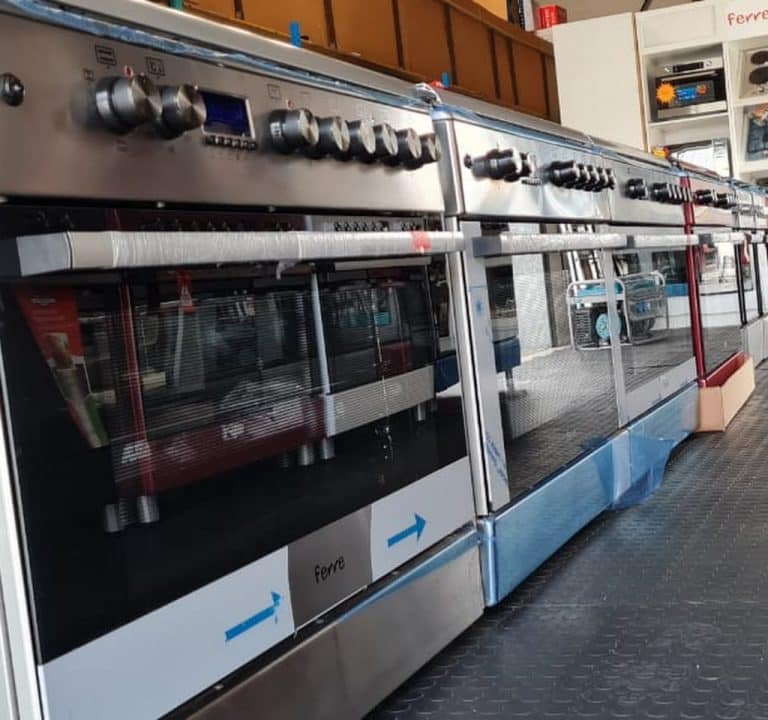
Cape Demo Appliances is a Appliance store establishment in Cape Town, Western Cape, South Africa
Cape Town
Western Cape
Montague Gardens, Cape Town
South Africa
Cape Demo Appliances—Overview of Services and Customer Experience in Cape Town
Cape Demo Appliances operates as a local appliance repair and maintenance provider serving Cape Town and the broader Western Cape area. The business profile centres on practical, hands‑on support for common domestic appliances, with an emphasis on resolving faults efficiently and restoring daily use with minimal disruption.
Core offerings appear to focus on the repair, servicing, and maintenance of household appliances such as refrigerators, cookers, ovens, washing machines, tumble dryers, and dishwashers. Customers typically encounter a service proposition that prioritises fault diagnosis, identified parts or components, and remedies implemented through professional repair work. The emphasis is on returning appliances to working condition while maximising longevity and safety for household use.
Typical job types
- Diagnosed faults on domestic appliances, ranging from cooling inefficiencies in refrigerators to heating or control faults in ovens.
- Component replacement and repair, including motors, compressors, seals, and control boards where feasible.
- Maintenance services aimed at preventing faults, extending appliance life, and improving efficiency, such as condenser cleaning or general inspection routines.
- Problem diagnosis and corrective actions for dishwashers, washing machines, and tumble dryers, including water leakage, drainage issues, or malfunctioning cycles.
- Electronics and control systems troubleshooting where specialist parts are required or where safe operation requires professional attention.
How service calls typically work
The service process often initiates with an on-site assessment to diagnose the issue. Following diagnosis, a quotation or estimate is usually provided for the necessary repairs or parts. Upon approval, the required components are procured and fitted, with repair work completed to restore appliance functionality. Where parts are unavailable immediately, customers may experience a staged approach or a scheduled follow‑up installation once parts arrive. The workflow tends to emphasise clear communication about fault causes, expected repair times, and any potential disruption to normal household use during the repair period.
Practical tips for customers
- Prepare essential information for the technician, such as the appliance model, age, and a concise description of the fault, to expedite diagnosis.
- Keep a log of noises, leaks, or performance changes to aid the assessment and prioritise the most pressing issues.
- Consider regular servicing to prevent avoidable faults, particularly for cooling appliances where coil cleanliness and door seal integrity influence efficiency.
- Understand that some repairs depend on the availability of specific parts; in some cases, prompt screw‑tightening or simple adjustments may address issues, while others require longer lead times for parts orders.
- During the repair process, confirm the safety of the appliance after work completion and verify that it operates across relevant cycles and settings before routine use resumes.
Location and area served
The business operates within Cape Town and surrounding Western Cape areas. While the site does not necessarily publish a comprehensive service radius, the operational emphasis is on serving domestic customers within this region, delivering responsive in‑home support where possible.
Business hours and visiting information
Publicly available information on specific business hours is not prominently published. Prospective customers should expect that appointment scheduling aligns with standard operating hours typical of local appliance repair services, and may involve weekday availability alongside possible weekend slots depending on the schedule and technician demand.
Customer experience considerations
Reviews and visitor feedback, when available, highlight a focus on practical problem‑solving, transparent explanations of fault causes, and a pragmatic approach to repairs and maintenance. The customer experience appears to emphasise reliability, clear communication regarding costs and timelines, and an understanding of the household context in which appliances are used. Where service details are described, the emphasis tends to be on delivering functional results with attention to safety and appliance longevity.
In summary, Cape Demo Appliances presents itself as a local specialist for domestic appliance issues, offering diagnosis, repair, and maintenance with an emphasis on practical turnaround and customer‑focused service. The typical engagement involves a diagnostic visit, a quoted repair plan, and subsequent parts or service work aimed at restoring appliances to full operation within the constraints of part availability and the household’s needs.


Sorry, no records were found. Please adjust your search criteria and try again.
Sorry, unable to load the Maps API.
Appliance, Plumbing, and Electrical Repair Services in Cape Town
<pAcross Cape Town, Western Cape, a network of skilled technicians offers essential repair services for household systems and appliances. From refrigerators to televisions, and from plumbing to electrical installations, professionals aim to restore functionality while emphasising safety and reliability. The following overview describes typical services, what customers can expect, and practical considerations when organising repairs.
Appliance repair is commonly centred on diagnosing faults, replacing worn components, and restoring performance. Common tasks include fault finding on cooling systems, motor and belt replacements, control panel diagnostics, and addressing household electrical faults that trigger breakers. Reputable technicians often begin with a diagnostic assessment to determine whether a repair is cost-effective or if a replacement unit is warranted. Expect clear communication about the issue, estimated turnaround, required parts, and any temporary solutions to maintain essential services while repairs are underway.
Plumbing services cover leak identification, pipe repair, tap replacement, drain clearing, and safety-conscious renovations. Plumbers typically perform pressure testing, assess water quality and flow, and identify hidden leaks that may cause damage over time. When addressing faults such as blocked drains or faulty fixtures, technicians emphasise appropriate materials, corrosion resistance, and long-term reliability. Customers should anticipate upfront advice on maintenance routines that can prevent future leaks and clogged lines, as well as any necessary permits or compliance considerations for larger installations.
Air conditioner repairs focus on refrigerant systems, compressor health, electrical connections, filters, and thermostat calibration. Technicians commonly conduct diagnostic checks with specialised equipment, inspect condenser coils, and test for proper airflow. Depending on the fault, repairs may involve cleaning, refrigerant top-ups (where permitted), or component replacement. Safety is a priority, with attention paid to electrical isolation, appropriate handling of refrigerants, and ensuring compliant installation practices. Timelines vary by job complexity and parts availability, but a clear prognosis is provided after the initial assessment.
Stove and oven repair covers ignition systems, heating elements, control boards, and gas safety considerations where applicable. Technicians may test burners, regulate temperature sensors, and inspect gas connections for leaks or blockages. For electric stoves, attention is given to switchgear and wiring integrity. As with other appliances, an initial diagnostic report outlines whether repair is feasible, what parts are required, and the expected timeframe for restoration of full functionality.
Refrigerator repair focuses on cooling inefficiencies, temperature inconsistency, frost build-up, and door seal integrity. Common interventions include compressor and fan inspections, evaporator coil checks, thermostat calibration, and seal replacements. Practical guidance often accompanies repairs, such as routine defrosting practices and door alignment to maintain energy efficiency. Customer expectations are managed through transparent pricing for diagnostics and part replacements, and by outlining the impact of repairs on overall energy consumption.
Television and home entertainment repairs address display issues, image and sound quality, power supply faults, and remote control functionality. Technicians employ diagnostic tools to isolate circuitry or panel problems and may perform panel refurbishment or board-level repairs where feasible. Turnaround times vary with the complexity of the fault and the availability of spare parts. Clear updates on likely outcomes help customers decide on repair versus replacement, particularly for older models or when repair costs approach new-unit prices.
Electrical repair services in Cape Town cover fault finding in wiring, outlets, and switch gear, as well as safety checks for consumer units and lighting circuits. Technicians emphasise compliance with electrical regulations, proper isolation procedures, and meticulous testing to verify safe operation after any intervention. Preventative maintenance advice, such as load management and visual inspections, helps reduce the risk of future problems. For all electrical work, a focus on safety, quality of workmanship, and clear documentation is typical.
Across these service areas, customers can expect professional assessment, transparent communication, proper safety practices, and a commitment to resolving issues with minimal disruption. Practical considerations such as parts availability, potential need for unit replacement, energy efficiency impacts, and preventative maintenance recommendations are routinely discussed to support long-term reliability in homes across the Cape Town region.
- Key expectations: initial diagnostic assessment, clear reporting, parts estimation, and realistic turnaround timelines.
- Safety and compliance: emphasis on safe handling of electricity, gas where applicable, and effective venting or refrigerant practices.
- Maintenance mindset: guidance on routine checks and simple measures to prevent recurring faults.